
5
2
Annual Report 2025
Mission
We are an energy company.


Global goals for a sustainable development
The 2030 Agenda for Sustainable Development, presented in September 2015, identifies the 17 Sustainable Development Goals (SDGs) which represent the common targets of sustainable development on the current complex social problems. These goals are an important reference for the international community and Eni in managing activities in those Countries in which it operates.


ActivitiesActivities
Activities
Eni is an energy company, integrated along the entire value chain, operating in 62 Countries worldwide with over 32 thousands employees. It has a significant presence in the traditional activities of exploration and production of conventional oil and gas and in the marketing of gas/LNG through an extensive supply portfolio.
Eni is engaged through innovative business models in the development of new energies and decarbonisation services: renewables from solar/wind, biofuels, biochemistry, CO2 capture/sequestration and research lines on new energy paradigms (magnetic fusion, chemical recycling of plastics). Eni has a large customer base of both industrial and end-user customers. The Group’s distinctive strategy is founded on competitive advantages, in-house expertise and proprietary technologies as reference points with the aim to grow, create value and transform the Company. In traditional activities, growth and returns leverage on successful exploration, with an option for early monetisation of discoveries, efficient resource development and the establishment of independent entities in synergy with qualified partners, in focused geographic areas, to pursue development opportunities and profitability.
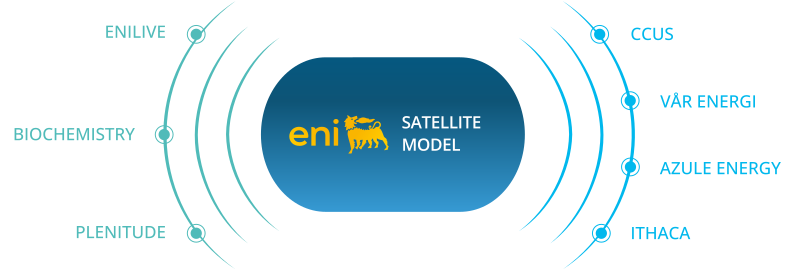
In the downstream oil/petrochemicals industry, a major process of transformation and reconversion is underway. In activities related to the energy transition, Eni’s satellite model involves the establishment of entities engaged in the development of products and solutions with reduced carbon footprint, capable, thanks to the entry of dedicated capital, of growing autonomously and financially independently, releasing value for the parent company, as evidenced by the successes of Enilive and Plenitude. The effective execution of the strategy is based on financial discipline in costs and investments and a robust capital structure, with the help of solid corporate governance and risk identification and management processes, allows for continued investment in the business and competitive returns to shareholders.
The development of effective sustainable solutions are leveraging on capable of immediately contributing to the reduction of emissions, such as:
- gas component as a bridge energy source in the transition, flanked by investments to reduce CO2 and methane emissions;
- traditional refining technologies applied in the production of biofuels, using raw materials of organic origin, not competing with the food chain in the context of the development of agri-business to contribute to the decarbonisation of transport without sudden changes to existing infrastructures;
- renewables through increased installed capacity and integration with the retail business, leveraging a large customer base;
- Carbon Capture Utilization and/or Storage (CCUS), able to provide a concrete contribution to the reduction of emissions, in particular in hard-to-abate sectors, thanks to the development of hubs for the storage of CO2;
- technologies for the production of bioplastics and mechanical recycling of used plastics.
Eni’s operations use a global supply chain for the procurement of capital goods, raw materials, works and services. The main assets procured were logistics support for the well area and ancillary services, offshore installations, engineering services for the oil and gas sector, professional services and well drilling services.
Eni's activities in the world
64 countries where we operate
Our value chain
Business ModelBusiness Model
Business Model
The significant industrial and economic-financial results achieved in 2025 thanks to the implementation of our growth and value creation strategy, developed over recent years by leveraging our asset portfolio, satellite model and transition businesses, demonstrate the strength of Eni’s business model.
Eni’s business model supports the company’s commitment to a socially fair energy transition and is aimed at achieving solid financial returns and creating long-term value for the stakeholders through a strong presence along the energy value chain. The company’s mission integrates the Sustainable Development Goals (SDGs) of the 2030 Agenda of the United Nations.
Eni is committed to contribute to ensuring energy security, leveraging on a global portfolio and on alliances with producing countries. At the same time, Eni implements a transition strategy based on a technologically neutral and pragmatic approach, aimed at maintaining the competitiveness of the production system and social sustainability.
These objectives leverage on a diversified geographical presence and a portfolio of solutions technologies that will create an increasingly decarbonized energy mix. Essential to achieve these objectives, the partnerships and alliances with stakeholders are used to ensure an active involvement in the definition of Eni’s activities and in the transformation of the energetic system.
Eni’s business model combines the use of technologies, largely proprietary, enhancing the value of internal skills and a strategic network of collaborations, with the development of an innovative model which provides for the creation of dedicated companies capable of autonomously finance their growth and, at the same time, to bring out the real value of each business.
Eni is present along the entire value chain – from exploration, development and extraction of resources to the marketing of energy, products and services to end customers – developing robust models of integrated business that enhance their industrial assets and customer base.
This integrated model is supported by the Corporate Governance system, based on the transparency and integrity principles, and the Integrated Risk Management process, which is functional to ensure, through the assessment and analysis of the risks and opportunities of the reference context, informed and strategic decisions and the materiality analysis that explores the most significant impacts generated by Eni on the economy, environment and people, including those on human rights.
The operation of the business model is based on the best possible use of all resources (inputs) available to the organization and their transformation into output, through the implementation of the strategy. Intangible resources are an integral part of the Eni’s value creation process and include people’s skills, innovation and relations with stakeholders, which is matter of disclosure in the sustainability reporting. Eni also organically combines its business plan with the principles of environmental and social sustainability, articulating its actions along five guidelines, each oriented towards specific results (outcomes):
- Carbon neutrality by 2050
- Environmental protection
- Value of our people
- Alliances for development
- Sustainability in the value chain
Eni’s business model is developed along these five lines by leveraging the development and application of innovative technologies and the process digitization. In implementing this model, Eni guarantees respect for human rights in the context of its activities and promotes them with its partners and stakeholders, also pursuing operations based on the values of responsibility, integrity and transparency.
Value creation for all stakeholders
Through an integrated presence across the entire energy value chain

Swipe and click on the plus icons to explore the chart below.
 Intangibles
(1)100% Plenitude
(2)100% Enilive
Carbon neutrality by 2050
Eni is undertaking a pathway aimed at achieving the decarbonization of its processes and energy products by 2050 through the deployment of both existing and emerging technologies, in line with the principle of technological neutrality. Eni complements the energy transition with a pragmatic, gradual and orderly approach, leveraging on a set of industrial and technological solutions aimed at progressively reducing emissions and expanding the supply of lower carbon intensity services and energy. In this context, natural gas plays a central role in the transition due to its lower carbon content compared to other fossil fuels and its flexibility, complementing other energy solutions that will become increasingly important in meeting energy demand.
Environmental protection
Eni is committed to protect the environment through the search for innovative solutions aimed at reducing the impact of its operations, ensuring efficient use of natural resources, the protection of biodiversity and water resources, and the promotion of development models based on regenerative principles of the circular economy, with the aim of maximizing the recovery and valorization of waste and scraps.
Value of our people
Eni recognizes the value of its people as a fundamental element for the success of the company and for this reason guarantees a working environment free from any form of discrimination that favors the full development of everyone’s potential, promoting the development of a culture based on dissemination of knowledge. Eni also complies with the highest international standards in terms of health and safety and adopts appropriate measures aimed at protecting people and assets.
Alliances for development
Eni aims to contribute to the reduction of energy poverty in the countries in which it operates, integrating the development of industrial projects and initiatives aimed at host communities, transferring know-how and skills to local partners. According to the so-called “Dual Flag” approach, Eni’s action is based on a deep respect for the individual, on knowledge of local instances and on the willingness to engage alongside countries to promote the sustainable development, also through partnerships with nationally and internationally recognized actors. In these countries, Eni promotes initiatives to support local communities to promote, in addition to the access to energy, economic diversification, training, community health, access to water and sanitation and land protection, in collaboration with international actors and in line with National Development Plans and the 2030 Agenda.
Sustainability in the value chain
Eni promotes the sustainable development of its supply chain, recognizing its key role in the transformation path undertaken. Through a systemic and inclusive approach, Eni shares values, commitments and targets with its suppliers, supporting and involving them in the growth path. Jointly, Eni supports its customers by offering cutting-edge energy solutions to help them play a leading role in the energy transition and communicates with them in an honest and transparent way, providing quality products and services in line with their needs.
Satellite Model
Eni at a glanceEni at a glance
€ 12.5 bln
adj. CASH FLOW
€ 12.2 bln
PROFORMA adj. EBIT
14 %
PROFORMA GEARING
€ 5 bln
adj. NET PROFIT
€ 8.5 bln
ORGANIC CAPEX
BRENT DATED
($/BL)
AVERAGE EUR/USD EXCHANGE RATE
STANDARD ENI REFINING MARGIN
(SERM) ($/BL)
PSV
(€/MWh)
Proforma adjusted EBIT (€ bln)
Cash generation (€ bln)
Shareholders remuneration (€ bln)
Gearing and debt
Performance of the yearPerformance of the year
Key data
Financial highlights
|
|
2025 |
2024 |
2023 |
|---|---|---|---|---|
Sales from operations |
(€ million) |
82,151 |
88,797 |
93,717 |
Operating profit (loss) |
|
5,010 |
5,238 |
8,257 |
Adjusted operating profit (loss)(a) |
|
8,344 |
10,348 |
13,805 |
Proforma adjusted operating profit (loss)(a) |
|
12,223 |
14,322 |
17,809 |
Exploration & Production |
|
11,163 |
13,022 |
13,538 |
Global Gas & LNG Portfolio and Power |
|
1,392 |
1,274 |
3,599 |
Enilive and Plenitude |
|
1,208 |
1,143 |
1,253 |
Refining and Chemicals |
|
(689) |
(713) |
46 |
|
4,989 |
5,257 |
8,322 |
|
Net profit (loss)(b) |
|
2,608 |
2,624 |
4,771 |
Adjusted net cash before changes in working capital at replacement cost |
|
12,496 |
13,590 |
16,498 |
Capital expenditure |
|
8,647 |
8,485 |
9,215 |
of which: exploration |
|
391 |
433 |
784 |
development of hydrocarbon reserves |
|
5,502 |
5,564 |
6,293 |
Dividend to Eni’s shareholders pertaining to the year(c) |
|
3,176 |
3,094 |
3,034 |
Cash dividend to Eni’s shareholders |
|
3,080 |
3,068 |
3,046 |
Total assets at year end |
|
137,069 |
146,939 |
142,606 |
Shareholders’ equity including non-controlling interests at year end |
|
52,787 |
55,648 |
53,644 |
Net borrowings at year end before IFRS 16 |
|
9,386 |
12,175 |
10,899 |
Net borrowings at year end after IFRS 16 |
|
15,086 |
18,628 |
16,235 |
Net capital employed at year end |
|
67,873 |
74,276 |
69,879 |
of which: Exploration & Production |
|
49,182 |
56,132 |
51,687 |
Global Gas & LNG Portfolio and Power |
|
(683) |
(1,322) |
1,876 |
Enilive and Plenitude |
|
10,424 |
10,396 |
8,688 |
Refining and Chemicals |
|
7,161 |
7,760 |
7,868 |
Share price at year end |
(€) |
16.1 |
13.1 |
15.4 |
Weighted average number of shares outstanding |
(million) |
3,024.8 |
3,167.0 |
3,303.8 |
Market capitalization at period end(d) |
(€ billion) |
48 |
40 |
50 |
(a) Non-GAAP measures.
(b) Attributable to Eni’s shareholders.
(c) The amount of dividend for the year 2025 is based on the Board’s proposal.
(d) Number of outstanding shares by reference price at year end.
Summary financial data
|
|
2025 |
2024 |
2023 |
|---|---|---|---|---|
Net profit (loss) |
|
|
|
|
per share(a) |
(€) |
0.78 |
0.78 |
1.40 |
($) |
1.76 |
1.69 |
3.03 |
|
Adjusted net profit (loss) |
|
|
|
|
per share(a) |
(€) |
1.55 |
1.60 |
2.47 |
($) |
3.50 |
3.46 |
5.34 |
|
Cash flow |
|
|
|
|
per share(a) |
(€) |
4.41 |
4.13 |
4.58 |
per ADR(a)(b) |
($) |
9.97 |
8.94 |
9.90 |
Adjusted Return on average capital employed (ROACE) |
(%) |
7.6 |
7.6 |
12.3 |
Gearing before lease liabilities ex IFRS 16(c) |
|
14 |
18 |
17 |
Coverage |
|
6.1 |
8.7 |
17.5 |
Current ratio |
|
1.2 |
1.2 |
1.3 |
Debt coverage |
|
88.4 |
70.3 |
93.1 |
Net Debt/EBITDA adjusted |
|
95.9 |
100.5 |
74.4 |
Dividend pertaining to the year |
(€ per share) |
1.05 |
1.00 |
0.94 |
Total Shareholder Return (TSR) |
(%) |
32 |
(9) |
23 |
(a) Fully diluted. Ratio of net profit/cash flow and average number of shares outstanding in the period. Dollar amounts are converted on the basis of the average EUR/USD exchange rate quoted by Reuters (WMR) for the period presented.
(b) One American Depositary Receipt (ADR) is equal to two Eni ordinary shares.
(c) Figure as at December 31, 2025 on a proforma basis, considering ongoing disposals/acquisitions.
Employees
|
|
2025 |
2024 |
2023 |
|---|---|---|---|---|
Exploration & Production |
(number) |
9,141 |
9,188 |
9,840 |
Global Gas & LNG Portfolio and Power |
|
1,077 |
1,151 |
1,130 |
Enilive and Plenitude |
|
6,064 |
5,899 |
5,759 |
Refining and Chemicals |
|
10,117 |
10,060 |
10,449 |
Corporate and other activities |
|
5,950 |
6,194 |
5,964 |
Group |
|
32,349 |
32,492 |
33,142 |
Innovation
|
|
2025 |
2024 |
2023 |
|---|---|---|---|---|
R&D expenditure |
(€ million) |
207 |
178 |
166 |
First patent filing application |
(number) |
42 |
39 |
28 |
Climate
|
|
2025 |
2024 |
2023 |
|---|---|---|---|---|
Net Scope 1+2 Upstream(a) |
(Mt CO2eq.) |
4.7 |
6.8 |
9.0 |
Net Scope Eni(a) |
|
21.4 |
23.8 |
26.7 |
Intensity Net Scope 1+2+3(b) |
(gCO2eq./MJ) |
59.0 |
59.2 |
60.1 |
Direct GHG emissions (Scope 1)(c) |
(Mt CO2eq.) |
18.6 |
21.2 |
22.7 |
Indirect GHG emissions (Scope 2)(c) |
|
0.5 |
0.6 |
0.6 |
Direct methane emissions (Scope 1)(c) |
(ktonnes CH4) |
14.8 |
16.0 |
16.6 |
(a) KPIs calculated on a consolidated basis. The 2024 and 2023 data are reported accordingly.
(b) KPI includes Scope 1+2 emissions (consolidated scope) and Scope 3 emissions from the use of products sold (Cat.11), estimated on the basis of Eni’s equity share of upstream production. The 2024 and 2023 data are reported accordingly.
(c) KPIs refer to 100% of the operated assets, consolidated and unconsolidated, with reference to the operatorship criteria expressed in the standards of the Sustainability Statement.
Health, safety and environment(a)
|
|
2025 |
2024 |
2023 |
|---|---|---|---|---|
Total Recordable Injury Rate (TRIR) |
(total recordable injuries/ |
0.55 |
0.70 |
0.57 |
employees |
|
0.60 |
0.73 |
0.66 |
contractors |
|
0.51 |
0.68 |
0.52 |
Total volume of oil spills (> 1 barrel) |
(barrels) |
217 |
2,815 |
12,719 |
of which: due to sabotage |
|
0 |
2,140 |
5,094 |
operational |
|
217 |
675 |
7,625 |
Fresh water withdrawals |
(mmcm) |
114 |
127 |
109 |
Re-injected produced water |
(%) |
56 |
51 |
42 |
(a) KPIs refer to 100% of the operated assets, consolidated and unconsolidated.
Exploration & Production
Key performance indicators
|
|
2025 |
2024 |
2023 |
|---|---|---|---|---|
Total Recordable Injury Rate (TRIR)(a) |
(total recordable injuries/ |
0.55 |
0.46 |
0.43 |
of which: employees |
|
0.73 |
0.18 |
0.48 |
contractors |
|
0.50 |
0.52 |
0.41 |
Profit per boe(b) |
($/boe) |
7.80 |
3.69 |
8.58 |
Opex per boe(d) |
|
9.2 |
9.2 |
8.6 |
Cash flow per boe |
|
20.5 |
17.3 |
19.4 |
|
17.0 |
22.7 |
26.3 |
|
Average hydrocarbon realization |
|
53.64 |
57.56 |
59.35 |
Production of hydrocarbons(d) |
(kboe/d) |
1,728 |
1,707 |
1,655 |
Net proved reserves of hydrocarbons(d) |
(mmboe) |
6,885 |
6,497 |
6,614 |
Reserves life index |
(years) |
10.9 |
10.4 |
10.6 |
Organic reserves replacement ratio |
(%) |
167 |
124 |
69 |
Employees at year end |
(number) |
9,141 |
9,188 |
9,840 |
of which: outside Italy |
|
5,101 |
5,171 |
5,927 |
Direct GHG emissions (Scope 1)(a) |
(Mt CO2eq.) |
4.6 |
6.7 |
7.6 |
Volumes of hydrocarbon sent to routine flaring(a) |
(billion Sm3) |
0.0 |
0.1 |
0.2 |
Total volume of oil spills (>1 barrel)(a) |
(barrels) |
4 |
2,163 |
5,132 |
Re-injected produced water(a) |
(%) |
56 |
51 |
42 |
(a) KPIs refer to 100% of the operated assets, consolidated and unconsolidated, with reference to the operatorship criteria expressed in the standards for Sustainability Statement.
(b) Related to consolidated subsidiaries.
(c) Three-year average.
(d) Includes Eni’s share of equity-accounted entities.
Download the full chapter as a pdf
Global Gas & LNG Portfolio and Power
Key performance indicators
|
|
2025 |
2024 |
2023 |
|---|---|---|---|---|
Total Recordable Injury Rate (TRIR)(a) |
(total recordable injuries/ |
1.11 |
0.51 |
0.00 |
of which: employees |
|
0.87 |
0.84 |
0.00 |
contractors |
|
1.51 |
0.00 |
0.00 |
Employees at year end |
(number) |
1,077 |
1,151 |
1,130 |
of which outside Italy |
|
336 |
386 |
390 |
Direct GHG emissions (Scope 1)(a) |
(Mt CO2eq.) |
9.3 |
9.3 |
9.4 |
Global Gas & LNG Portfolio |
|
|
|
|
Natural gas sales(b) |
(bcm) |
43.72 |
50.88 |
50.51 |
Italy |
|
21.00 |
24.40 |
24.40 |
Rest of Europe |
|
18.73 |
23.40 |
23.84 |
of which: Importers in Italy |
|
0.91 |
1.26 |
2.29 |
European markets |
|
17.82 |
22.14 |
21.55 |
Rest of world |
|
3.99 |
3.08 |
2.27 |
LNG sales(c) |
|
12.1 |
9.8 |
9.6 |
Power |
|
|
|
|
Power sales in the open market(b) |
(terawattora) |
27.57 |
26.55 |
27.30 |
Thermoelectric production |
|
20.53 |
20.16 |
20.66 |
(a) KPIs refer to 100% of the operated assets, consolidated and unconsolidated, with reference to the operatorship criteria expressed in the standards for Sustainability Statement.
(b) Data include intercompany sales.
(c) Refers to LNG sales of the GGP segment (included in worldwide gas sales).
Download the full chapter as a pdf
CCS and Agri
Eni recognizes and supports the transition to a low carbon model and, on this basis, targets zero Scope 1, 2 and 3 emissions by 2050. Eni’s decarbonization path leverages on the skills and knowledge, matured within our traditional businesses and is implemented through the development of innovative and distinctive models related to projects aimed to capture, transport and storage CO2 (CCS), agri-business and carbon offset initiatives.
CCS projects
Eni has developed a distinctive model for CO2 capture and storage, based on the expertise matured in natural gas storage and the use of exhausted gas reservoir for CO2 storage with projects in Italy and abroad.
As part of the strategy of valorization of ongoing projects, in December 2025 Eni finalized the agreement with Global Infrastructure Partners (“GIP”), a leading global investor in the infrastructure sector that is part of BlackRock, for the sale of a 49.99% stake in Eni CCUS Holding, a Satellite Company that is developing, through its subsidiaries, the projects in the United Kingdom of Liverpool Bay and Bacton, as well as the L10-CCS project in the Netherlands. The Company also has the right to acquire Eni’s 50% stake in the Ravenna CCS project in Italy and may include other potential projects in a broader platform of CCUS initiatives in the medium-to-long-term.
Italy
Ravenna CCS, developed jointly with Snam, is the first Italian CCS project. Phase 1, launched in 2024, was designed to capture up to approximately 25 ktonnes/year of CO2 from Eni’s natural gas processing plant Casalborsetti and store it in the depleted offshore field of Porto Corsini Mare Ovest. The capture system has recorded an efficiency of more than 90%, with peaks of 96%, using self-produced thermal energy and electricity from renewables, ensuring that the CO2 captured actually corresponds to that abated. In June 2025, the authorization process for Phase 2 of the Ravenna CCS was launched. The project envisages, once the necessary authorizations has been received, the startup of a larger scale industrial development with a CO2 transport and storage capacity reaching 4 mmtonnes/year by 2030, with potential subsequent expansion up to 16 mmtonnes/year. Ravenna CCS is included in the European list of Projects of Community Interest (PCI Projects) as part of the integrated Callisto project, which also involves emitters from France and Greece.
United Kingdom
In the United Kingdom, Eni has established a leadership position with the Liverpool Bay CCS project under development, as part of the HyNet North West Cluster, selected by the UK Government as one of the Country’s two priority CCS projects (“Track 1”). Eni CCUS Holding, through its subsidiary Eni LBA Ltd (100% operator), in 2025 has obtained the economic license from the UK Government for CO2 for transport and storage activities. The execution phase, started in 2025, includes the conversion and reuse of its offshore gas depleted fields as well as the repurposing of part of the existing infrastructure in Liverpool Bay to decarbonize the industrial districts of North-West England and North Wales.
The CO2 transport and storage infrastructure will be available in 2028 with an initial capacity of 4.5 mmtonnes/year, expected to grow up to 10 mmtonnes/year after 2030.
With regards to the emitters that will supply the CO2, the UK authorities have selected 5 priority capture projects for a total volume of approximately 4.4 mmtonnes/year of CO2, two of which have already reached a final agreement with the UK Government in September 2025 which allowed the start-up of the construction phase. In addition, in August 2025 the UK Government identified a further list of emitters to be considered for a possible expansion of the system up to 10 mmtonnes/year.
In the United Kingdom, the engineering phase is underway for the development of the Bacton CCS project, which involves the storage of CO2 in the Hewett offshore depleted gas field to contribute to the decarbonization of the south-eastern area of the Country and the industrial area of London. The strategic position of the field, in the south-west part of the North Sea, also allows to hypothesize an important role of the project in the decarbonization process of industrial sites in northern Europe.
Netherlands
Eni CCUS Holding holds 39% of the joint venture that is developing the CCS L10 project and which involves the storage of CO2 in the depleted offshore fields in the North Sea, with a capacity of approximately 5 mmtonnes/year. The issuance of the storage license is expected in 2026 and negotiations are underway with emitters and consortia for the transport and collection hub of CO2. The project has received a European grant linked to the Connecting Europe Facility of €55 million for development. The project aims to decarbonize the industrial sectors of north-western Europe, providing sufficient storage capacity to accommodate emissions not only from the Netherlands but also from Germany, France and Belgium.
Agri-Feedstock initiatives
Eni has developed an integrated model for the production of vegetable oil for its supply chains starting from feedstock produced by the cultivation of degraded land, rotational crops and the valorization of waste and residues from the agro-industrial and forestry supply chains. This end-to-end approach aims at ensuring volumes of vegetable oil at competitive cost, supporting the expansion of biorefineries and generating positive impacts on local employment and development. The vegetable oil’s by-products are recovered and enhanced in the feed and fertilizer supply chains, with positive impact on the food security in these territories. Eni’s agri-feedstock supply chains are certified according to the ISCC-EU (International Sustainability and Carbon Certification) sustainability scheme, one of the main voluntary standards recognized by the European Commission for the sustainability certification of biofuels (EU RED III). In 2025 production of vegetable oil amounted to 211 ktonnes, with activities in several countries, including Congo, Kenya, Côte d’Ivoire, Angola, Mozambique, Italy, Rwanda, Vietnam and Indonesia.
Eni has also strengthened the sustainability of the supply chain by signing an agreement with the International Labour Organization to promote occupational safety and human rights in agriculture. Finally, during 2025, a further non-binding agreement was signed with IFC aimed at expanding collaboration to other Countries on the African continent to support Eni’s activities in the Agri-Feedstock, Clean Cooking and Waste to Energy sectors.
Carbon offset initiatives
As part of the REDD+ (Reducing Emissions from Deforestation and forest Degradation) program, Eni supports projects for the protection, conservation and sustainable management of forests in developing Countries, with initiatives in Zambia, Tanzania, the Democratic Republic of Congo, Mozambique, Mexico and Côte d’Ivoire. These projects aim to reduce emissions from deforestation and enhance the natural carbon sequestration, while also promoting sustainable development models for local communities.
During the year, the development of the first Sustainable Agriculture Land Management (SALM) Makueni Agroforestry Carbon Project (MACP) in Kenya continued, alongside the Sustainable Agriculture Land Management Program project in Mozambique. Further initiatives in Africa, Latin America and Asia are also being evaluated.
The application of technological solutions is in addition to nature-based solutions for the generation of carbon credits. In this context, the Company promotes the “Eni for Clean Cooking” programme for the development of projects that encourage the use of safe and efficient cooking systems that ensure a reduction in household non-renewable biomass consumption, with the aim of improving health conditions and promoting forest conservation. In addition to the positive impact on health and the environment, the industrial approach to the issue of access to “clean cooking” also supports the development of entrepreneurship and the local economy.
In this context, Eni has made a commitment to guarantee access to clean cooking for 20 million people by 2030. In 2025 alone, more than 2.2 million people have been reached in Sub-Saharan Africa, totalling around 3.7 million people since the programme began. Projects are being implemented in Côte d’Ivoire, Congo, Mozambique, Angola, Rwanda, Tanzania and Madagascar and expansion to other countries in Sub-Saharan Africa and Asia is being considered.
During 2025, feasibility studies have been launched for the use of “advanced” clean cooking systems that envisage the distribution of induction stoves in urban areas and pyrolysis stoves in rural areas that promote, from a circular economy perspective, the use of agricultural waste, including by-products of Eni’s agri-feedstock supply chain.
Download the full chapter as a pdf
Enilive and Plenitude
Key performance indicators
|
|
2025 |
2024 |
2023 |
|---|---|---|---|---|
Enilive |
|
|
|
|
Total Recordable Injury Rate (TRIR)(a) |
(total recordable injuries/ |
0.50 |
0.76 |
1.38 |
of which: employees |
|
0.20 |
0.97 |
2.02 |
contractors |
|
0.78 |
0.57 |
0.74 |
Employees at year end |
(number) |
3,174 |
3,111 |
3,202 |
of which: outside Italy |
|
1,172 |
1,150 |
1,315 |
Direct GHG emissions (Scope 1)(a) |
(Mt CO2eq.) |
0.6 |
0.5 |
0.5 |
Bio throughputs |
(ktonnes) |
1,157 |
1,115 |
866 |
Biorefining capacity |
(mmtonnes/year) |
1.65 |
1.65 |
1.65 |
Average biorefineries utilization rate |
(%) |
78 |
74 |
71 |
Retail sales of petroleum products in Europe |
(mmtonnes) |
7.81 |
7.70 |
7.52 |
Service stations in Europe at year end |
(number) |
5,294 |
5,254 |
5,267 |
Retail efficiency index |
(%) |
1.17 |
1.22 |
1.19 |
Plenitude |
|
|
|
|
Total Recordable Injury Rate (TRIR)(a) |
(total recordable injuries/ |
0.17 |
0.19 |
1.09 |
of which: employees |
|
0.00 |
0.23 |
0.25 |
contractors |
|
0.85 |
0.00 |
3.36 |
Employees at year end |
(number) |
2,890 |
2,788 |
2,557 |
of which: outside Italy |
|
955 |
922 |
788 |
Direct GHG emissions (Scope 1)(a) |
(Mt CO2eq.) |
0.003 |
0.004 |
0.005 |
Gas sales to end customers |
(bcm) |
5.29 |
5.51 |
6.06 |
Power sales to end customers |
(TWh) |
18.63 |
18.28 |
17.98 |
Retail and business customers at period end |
(million of pod) |
9.95 |
10.03 |
10.11 |
EV charging points |
(thousand) |
22.8 |
21.3 |
19.0 |
Energy production from renewable sources |
(TWh) |
5.6 |
4.7 |
4.0 |
Installed capacity from renewables at period end |
(GW) |
5.8 |
4.1 |
3.0 |
(a) KPIs refer to 100% of the operated assets, consolidated and unconsolidated, with reference to the operatorship criteria expressed in the standards for Sustainability Statement.
Download the full chapter as a pdf
Refining and Chemicals
Key performance indicators
|
|
2025 |
2024 |
2023 |
|---|---|---|---|---|
Total Recordable Injury Rate (TRIR)(a) |
(total recordable injuries/ |
0.53 |
1.43 |
0.49 |
of which: employees |
|
0.61 |
1.36 |
0.55 |
contractors |
|
0.43 |
1.52 |
0.42 |
Employees at year end |
(number) |
10,117 |
10,060 |
10,449 |
of which: outside Italy |
|
2,500 |
2,501 |
2,747 |
Direct GHG emissions (Scope 1)(a) |
(Mt CO2eq.) |
4.0 |
4.7 |
5.2 |
Refining |
|
|
|
|
Refinery throughputs on own account |
(mmtonnes) |
24.94 |
24.21 |
27.39 |
Conversion index of oil refineries |
(%) |
53 |
52 |
47 |
Average oil refineries utilization rate |
|
80 |
78 |
77 |
Chemicals |
|
|
|
|
Production of chemical products |
(ktonnes) |
4,105 |
5,685 |
5,663 |
Sales of chemical products |
|
2,719 |
3,169 |
3,117 |
Average chemical plant utilization rate |
(%) |
49 |
50 |
51 |
(a) KPIs refer to 100% of the operated assets, consolidated and unconsolidated, with reference to the operatorship criteria expressed in the standards for Sustainability Statement.
Download the full chapter as a pdf
Environmental activities
Eni Rewind is the Eni’s subsidiary engaged in the valorization of land, water and waste resources, industrial or deriving from reclamation activities, to give them new life leveraging on the circular economy principles, through sustainable reclamation and revaluation projects, both in Italy and abroad. Eni Rewind, through its integrated end-to-end model, guarantees the supervision of every phase of the process reclamation and waste management, planning projects from the early stages to enhance and reuse resources (soils, water, waste), making them available for new development opportunities.
Reclamation activities
Based on the expertise acquired and in collaboration with the relevant Authorities and stakeholders, Eni Rewind identifies projects aimed at enhancing and reusing remediated areas, allowing the environmental recovery of former industrial sites and the revitalization of the local economy.
Eni Rewind operates in 16 sites of national priority and over 100 sites of regional priority, confirming its position as global contractor for all Eni’s subsidiaries.
Among the main remediation projects at its owned sites, notable interventions include those at: Assemini, Avenza, Brindisi, Cengio, Crotone, Gela, Pieve Vergonte, Porto Marghera, Porto Torres, Priolo and Ravenna.
In 2025, Eni Rewind continued land remediation interventions. In Porto Torres, in the “Minciaredda” area, remediation efforts continued thanks to the environmental platform, which increased treatment volumes during the year.
At the Brindisi site, the permanent soil safety interventions in the Micorosa area have been completed and certified. In addition, the reclamation of the Protected Oasis area has been completed, with the removal of the anthropogenic accumulations. For the latter, the request for certification is required at the end of the environmental monitoring.
At the Pieve Vergonte site, Eni Rewind has taken important steps in the remediation process. After obtaining the Decree of Variant of the Operational Reclamation Project (POB) – Phase 1 in September 2024, the construction site for the diversion of the Marmazza river was started, aimed at ensuring hydraulic safety and preserving the underground water resource.
In the first half of 2026, the company will present the POB Variant Project – Phase 2 which provides for a remodulation of the interventions in response to the requirements of technical and local authorities.
Relating to the Crotone site, in the first half, excavations have been started at the former Pertusola landfill and inland areas, in compliance with the POB Phase 2 Decree excerpt issued by the MASE in August 2024, following the obtaining of cross-border notifications for the delivery of hazardous waste to Sweden, in the face of the prohibition imposed by the PAUR (Provvedimento Autorizzatorio Unico Regionale) for the delivery of waste in the region and in particular at the only national landfill suitable for the delivery of hazardous waste. In August, however, the Calabria TAR, accepting the appeal of the local authorities, annulled the POB Phase 2 decree excerpt of August 2024, considering the request to amend the PAUR illegitimate. Therefore, the Ministry of the Environment in August 2025 launched a new Services Conference to define the new authorization process.
Water & waste management
Eni Rewind manages water treatment for the purpose of remediation activities at Eni sites and owned by Eni Rewind, through an integrated system for intercepting the aquifer and conveying groundwater to treatment plants for its purification.
The automation and digitalization project of the treatment plants continued in 2025 as part of a broader optimization initiative, with the aim of increasing the competitiveness and sustainability of the business, the quality of work and process safety.
The main drivers of the project consist in the adoption of optimized operating models for the management of the plants, already operational in some sites, leveraging the enhancement of the Control Room in San Donato Milanese and the digitization of the sites connected to it. A further area of digitization is that of the maintenance process, which has seen the adoption of special maintenance management software service.
Currently, 45 water treatment plants are operational and managed in Italy, with approximately 40 million cubic meters of water treated in 2025, an increase compared to the previous year.
In December 2025, more than about 10 million cubic meters of water were reused after treatment, thanks to higher volumes emitted due to higher rainfall and grater withdrawal of water for industrial use.
Eni Rewind is Eni’s center of competence for the management of waste both from reclamation and remediation activities and from Eni’s production sites, for which it carries out a specialist waste management service.
Eni Rewind managed a total of about 2.2 million tons of waste in 2025, an increase compared to 2024, sending it for recovery or disposal at external plants. The difference is due to the increase in liquid waste, managed for disposal at external plants, produced by the Upstream business and from Eni’s Biorefining division, for the emergency safety measures (MISE) at the Sannazzaro site and for the soils produced in Livorno during the construction works of the Biorefinery.
The recovery index (ratio of recovered/recoverable waste) was 78%, a slight increase compared to 2024 (76%), due to the actual analytical characteristics of the mix of waste managed. Hazardous waste amounts to 21% of the total. Compared to the total volumes managed by Eni Rewind in 2025, the part relating to Eni customers currently makes up about 83% of the total.
Main projects
Ponticelle Project
In a remediated area owned by Eni Rewind, the construction of two plants is nearing completion: a bioremediation platform for soils contaminated by hydrocarbons (capacity: 80,000 tonnes/y) and an industrial waste pretreatment plant (capacity: 60,000 tonnes/y) using processes such as shredding, repackaging, storage and other intermediate operations. The plant will be managed through a 50/50 joint venture with Herambiente, and its start-up is expected during the first half of 2026.
Certifications
Eni Rewind pursues highest quality standards through an HSEQ Integrated Management System, certified according to the international standards ISO 14001:2015 (Environmental Management), ISO 45001:2018 (Occupational Health and Safety) and ISO 9001:2015 (Quality Management). The certification is also extended to the services provided by Eni Rewind at the sites of Eni and Eni’s companies.
During 2025, the Company maintained SOA certification in the categories already achieved and in place (OS-14, OS-22, OS-23, OG-12), necessary for the development of initiatives in the public sector of the “non-captive” market of interest.
Non-captive initiatives
During 2025, Eni Rewind continued its commitment to consolidate and expand its non-captive portfolio.
Among the main initiatives, as part of the contract signed in 2023 with Kuwait Refining and Chimica SpA, remediation work continued at the former plant in Naples. Under this contract, Eni Rewind is responsible for managing engineering activities, environmental analyses and the operation of a specific installed plant.
SustainabilitySustainability
Eni’s 2025 Consolidated Sustainability Statement is prepared in accordance with Legislative Decree No. 125/2024 and the Europea Sustainability Reporting Standards (ESRS) and includes the disclosure requirements set out in Article 8 of Regulation (EU) 852/2020 (EU Taxonomy). The document is structured in accordance with the ESRS topical standards and organised into three topical sections covering environmental, social and governance matters. The Sustainability Statement, prepared on a consolidated basis, is approved by the BoD and subject to a limited assurance. In a global context marked by increasingly complex energy, environmental and social challenges, Eni recognises energy as a key enabler of development and inclusion and is actively committed to a Just Transition, considered one of the energy sector’s key strategic challenges. In line with its Mission and Code of Ethics, the Company integrates a responsible approach into its industrial activities, with the aim of creating long-term value for stakeholders and the communities in which it operates. In 2025, Eni reaffirmed its commitment to achieving Carbon Neutrality by 2050; key action areas include the reduction of GHG emissions (Scope 1, 2 and 3), the development and deployment of mitigation technologies, the expansion of its portfolio of lower carbon products and services, and the offsetting of residual emissions. Eni’s ESG commitments and actions are structurally embedded within its Business Model, supporting the evolution and growth of its activities while creating value for stakeholders. To promote a just and sustainable transition, Eni has for several years defined, within its strategic plan, measurable targets with clear timelines as well as specific commitments. These represent a concrete contribution to the creation of shared value for local communities, environmental protection and the promotion of responsible and transparent governance.
Environmental
Climate change [E1]
Business model lever
Carbon neutrality by 2050
Main targets and commitments
- Net Zero Scope 1+2 Upstream emissions by 2030 (Mt CO2eq.)
- Net Zero Scope 1+2 Eni emissions by 2035 (Mt CO2eq.)
- Net Zero Intensity Scope 1+2+3 emissions by 2050 (gCO2eq./MJ)
- Zero routine flaring Upstream emissions by 2026, with performance levels maintained through 2030
- Upstream fugitive methane emissions -80% by 2025
- Upstream methane emissions intensity below 0.2% by 2025, with performance levels maintained through 2030
2025 key metrics
- Net Scope 1+2 Upstream emissions: 4.7 Mt CO2eq. (-68% vs. 2018)
- Net Scope 1+2 Eni emissions: 21.4 Mt CO2eq. (-40% vs. 2018)
- Net Intensity Scope 1+2+3 emissions: 59 gCO2eq./MJ (-6% vs. 2018)
- Zero routine flaring Upstream emissions: target achieved for operated assets by 2025
- Upstream fugitive methane emissions: -97% vs. 2014 (target achieved)
- Upstream methane emissions intensity: 0.09% (target achieved)
Pollution [E2]
Business model lever
Environmental protection
Main targets and commitments
- Safeguarding water and soil resources and air quality, and minimising risks and impacts from emissions affecting the environmental matrices
2025 key metrics
- Air emissions decreased vs 2024: SOX (-7%), NOX (-16%),
- NMVOC (-26%) and PM (-33%)
- Hydrocarbons in wastewater: 53.4 t, in significant reduction (-50%) vs 2024
- Operational oil spills (>1 barrel): -68% vs. 2024
Water and marine resources [E3]
Business model lever
Environmental protection
Main targets and commitments
- Water positivity by 2035 for at least 30% of operated sites with high‑quality freshwater withdrawals greater than 0.5 Mm3/year in water‑stressed areas as of 2023, with the ambition to reach water positivity by 2050 at operated sites
2025 key metrics
- Freshwater withdrawals: over -10% vs. 2024
Biodiversity and Ecosystems [E4]
Business model lever
Environmental protection
Main targets and commitments
- Commitment to implementing actions aimed at safeguarding biodiversity and ecosystem services by focusing on the prevention and minimisation of risks and impacts.
2025 key metrics
Operational Sites non‑Oil & Gas Upstream business lines – Number of sites/concessions:
- Overlapping sites: 39 (of which 25 are renewable energy sites)
- Adjacent sites (<1 km): 71 (of which 50 are renewable energy sites)
Concessions overlapping Oil & Gas Upstream business line – Number of sites/concessions:
- With operational activities within the overlap area: 22
- Without operational activities within the overlap area: 19
Resource Use and Circular Economy [E5]
Business model lever
Environmental protection
Main targets and commitments
- Prevention and proper management of waste generation in line with the priority criteria established under EU legislation. Engagement in implementing projects with a strong circular footprint.
2025 key metrics
- Total waste generated: 4.6 Mt
- Total hazardous waste: 0.5 Mt
- Total amount of non-recycled waste: 77%
Social
Own Workforce [S1]
Business model lever
Value of our people
Main targets and commitments
- +4 p.p. in the share of women in the workforce and +3.8 p.p. increase in women in leadership roles (Senior managers and Middle managers) by 2030 vs. 2020
- +6.5 p.p. employees under 30 by 2030 vs. 2020
- +10% training hours by 2029 vs. 2025
- +2 p.p. increase in non-Italians employees in leadership roles by 2030
2025 key metrics
- 31,523 employees (head count)
- 9,028 women employees; +4 p.p. vs. 2020
- 2,965 employees under 30; +2.8 p.p. vs. 2020
- 30.8% women in leadership roles (Senior managers and Middle managers); +4.2 p.p. vs. 2020
- 33.5 average training hours per employee; +4.4% vs. 2024
- Rate of turnover: 7.5%
- 10% Gender pay gap (+3 p.p. vs. 2024)
- 16.7% non-Italians employees in leadership roles (-1.9 p.p. vs. 2020)
Health & Safety [S1]
Business model lever
Value of our people
Main targets and commitments
- Total Recordable Injury Rate (TRIR) ≤0.50 by 2026-2030
- 85% employees with access to psychological support services in Italy and abroad by 2028
2025 key metrics
- Total Recordable Injury Rate (TRIR): 0.55, improved compared to 2024 (0.70)
- 80% employees with access to psychological support services
Affected Communities [S3]
Business model lever
Partnerships for development
Main targets and commitments
- More than 20 million people reached by 2030 through initiatives in support of local communities
2025 key metrics
- ~3 million people reached
- €81 million invested in local development initiatives
Consumers and end-users (Plenitude) [S4]
Business model lever
Sustainability in the value chain
Main targets and commitments
- 30,000 installed proprietary EV charging points by 2030
2025 key metrics
- ~23,000 installed proprietary EV charging points
Governance
Business Conduct – Sustainable Supply Chain Management [G1]
Business model lever
Sustainability in the value chain
Main targets and commitments
- Maintenance of ESG evaluations in procurement processes for more than 90% of procurement volumes in Italy
- Maintenance of 100% of strategic suppliers worldwide assessed on their sustainable development pathway
- New target: 90% of the value of active contracts awarded to suppliers involved in new safety-related initiatives, for a continuous improvement
2025 key metrics
- 97% of procurement awarded based on ESG criteria in Italy
- 100% of strategic suppliers worldwide assessed on their sustainable development pathway